Many parents have heard of Montessori, but aren’t exactly sure what makes it different. The Montessori Method has helped children develop confidence, independence, and a love of learning for more than 100 years. Developed by Dr. Maria Montessori, this educational approach focuses on helping children learn through experience, exploration, and meaningful activities.
For families researching preschool or elementary education, understanding how Montessori works can make it easier to decide whether this approach matches their child’s needs. This guide explains what the Montessori Method is, how a Montessori classroom works, what children learn, and what parents should look for when choosing a Montessori school.
What Is the Montessori Method?
The Montessori Method is an educational approach developed by Dr. Maria Montessori that emphasizes hands-on learning, independence, and child-centered instruction. In a Montessori classroom, children explore carefully prepared learning materials while teachers guide their development according to each child’s individual needs and readiness.
Founded in the early 1900s, Montessori education is based on the idea that children learn best when they are actively involved in the process. Instead of following a single pace set for the entire class, children are encouraged to explore lessons when they are developmentally ready.
The Montessori philosophy respects each child as an individual. Teachers create a structured environment where children can build academic skills while also developing confidence, responsibility, problem-solving abilities, and social awareness.

The Core Principles of Montessori Education
Montessori education is built around several key principles that support the development of the whole child.
Independence
A major goal of Montessori learning is helping children become independent. Children are encouraged to complete tasks on their own, make thoughtful choices, and develop confidence in their abilities.
Simple activities such as preparing a snack, organizing materials, or caring for the classroom help children understand responsibility.
Hands-On Learning
Montessori children learn through hands-on learning rather than only listening to explanations. Specially designed materials allow children to explore concepts by touching, moving, sorting, and experimenting.
For example, a child learning mathematics may use physical materials to understand numbers before moving toward abstract equations.
Respect for the Child
The Montessori philosophy views children as capable learners who deserve respect. Teachers observe children carefully, listen to their needs, and provide support without rushing their development.
Prepared Environment
A prepared environment is a carefully organized classroom designed to support independence and exploration. Materials are placed where children can access them, and every activity has a clear purpose.
The prepared environment allows children to choose meaningful work while developing concentration and problem-solving skills.
Freedom Within Limits
Freedom within limits means children have choices, but those choices exist within classroom expectations and routines. Children may choose activities, but they learn to respect others, care for materials, and complete work responsibly.
Individualized Learning
Montessori classrooms recognize that children develop at different rates. Teachers adjust lessons based on each child’s interests, abilities, and readiness instead of expecting every child to learn the same concept at the same time.
Teacher as Guide
A Montessori teacher does not simply lecture or direct every activity. Instead, the teacher observes, introduces lessons, and guides children toward appropriate challenges.
The teacher’s role is to support learning while allowing children to discover skills independently.
What Does a Montessori Classroom Look Like?
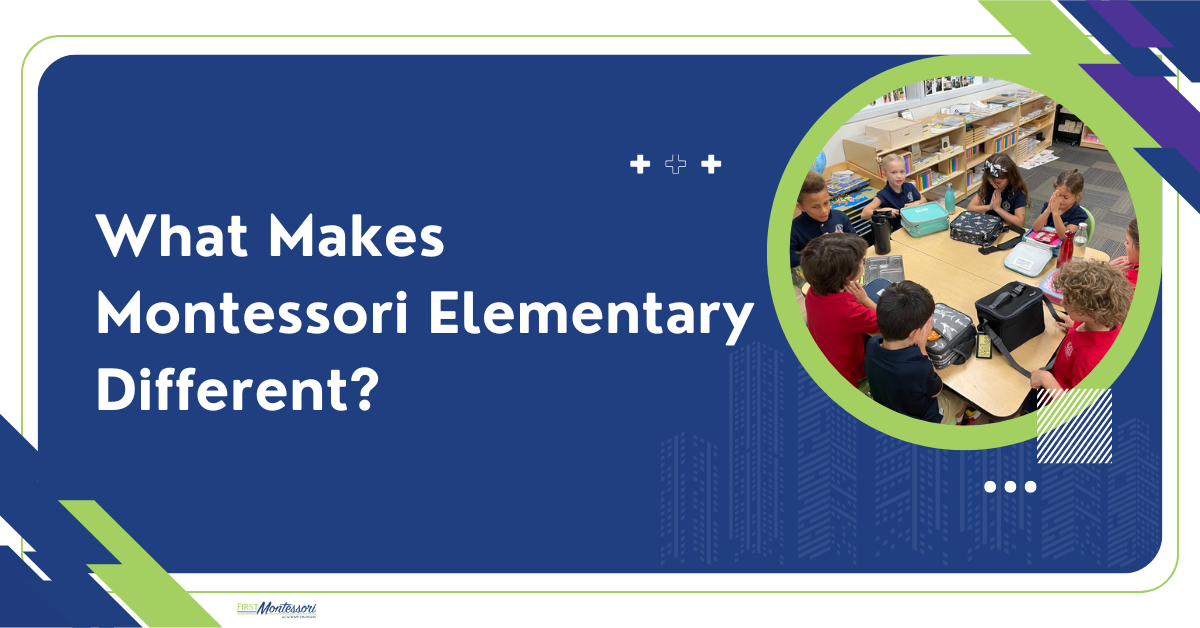
A Montessori classroom is designed to encourage focus, independence, and exploration. Instead of rows of desks facing a teacher, children typically find organized learning areas with carefully arranged materials.
A Montessori classroom may include areas for:
- Practical Life activities
- Language development
- Mathematics
- Science
- Cultural studies
- Creative exploration
Children often work individually or in small groups. The classroom environment is usually calm and purposeful, allowing children to concentrate on meaningful tasks.
Many Montessori classrooms are mixed-age classrooms, meaning children of different ages learn together. Younger children can learn from older classmates, while older children develop leadership and cooperation skills.
Teachers observe children and provide guidance when needed. Children are encouraged to choose activities, repeat lessons, and develop mastery at their own pace.
What Do Children Learn in Montessori?
Montessori programs support academic, social, emotional, and practical development.
Practical Life
Practical Life activities help children develop everyday skills and independence. Examples include:
- Pouring water
- Food preparation
- Cleaning
- Organizing materials
- Caring for the classroom environment
These activities build coordination, concentration, confidence, and responsibility.
Language
Montessori language learning supports reading, vocabulary development, writing, and communication skills. Children may work with hands-on materials that connect sounds, letters, and words.
Mathematics
Montessori math materials allow children to understand numbers through physical exploration. Children develop number sense, problem-solving skills, and mathematical thinking before moving toward more abstract concepts.
Science and Cultural Studies
Children explore geography, nature, history, and world cultures through age-appropriate activities. Montessori learning encourages curiosity about the world and helps children understand their place within it.
Social-Emotional Development
Montessori education also focuses on respect, cooperation, confidence, and responsibility. Children practice working with others, resolving challenges, and becoming thoughtful members of a community.
How Is Montessori Different From Traditional Education?
Many parents compare Montessori vs. traditional preschool when deciding which environment may work best for their child.
| Montessori Classroom | Traditional Classroom |
| Teacher guides learning | Teacher directs instruction |
| Individual learning pace | Whole-class pace |
| Hands-on materials | Textbooks and worksheets |
| Mixed-age classrooms | Same-age classrooms |
| Student choice | Teacher-directed schedule |
| Self-directed exploration | Teacher-led lessons |
Both educational approaches can support children, but Montessori education places a stronger focus on independence, exploration, and individualized learning.

Is Montessori Structured?
Yes. A common misconception is that Montessori classrooms are unstructured because children have choices.
In reality, Montessori schools use carefully planned routines, classroom expectations, and prepared environments. Children have freedom within limits, meaning they can make choices while learning boundaries and responsibility.
The structure comes from the classroom design, the Montessori materials, and the guidance of trained teachers.
What Does “Follow the Child” Mean?
The phrase “follow the child” is central to Montessori philosophy. It means teachers observe children to understand:
- Their interests
- Their readiness
- Their learning style
- Their stage of development
Following the child does not mean children can do whatever they want. Instead, teachers use observation to provide lessons and activities that match each child’s needs.
This approach allows children to build skills when they are ready, creating a more personalized learning experience.
Is Montessori Right for Every Child?
Many children thrive in Montessori because they enjoy exploration, hands-on learning, independence, and problem-solving. Children who like discovering things for themselves may find the Montessori environment especially engaging.
However, every child is different. Parents should consider their child’s personality, learning preferences, and needs when choosing an educational setting.
Visiting schools, observing classrooms, and speaking with teachers can help families decide whether a Montessori preschool or Montessori school is the right fit.
What Should Parents Look for in an Authentic Montessori School?
Choosing an authentic Montessori school involves looking beyond the name. Parents should consider:
- Trained Montessori teachers
- Authentic Montessori materials
- Prepared classrooms
- Small class sizes
- Respectful classroom culture
- Individualized learning
- Strong parent communication
For families looking for Montessori education Sarasota options, First Montessori Academy provides an example of an environment focused on authentic Montessori principles. The school serves children from 18 months through elementary school and emphasizes experienced leadership, child-centered learning, and developmentally appropriate programs.
Parents exploring a Montessori school Sarasota option can learn more by visiting classrooms, asking questions, and understanding how the school applies Montessori methods in daily learning.
Frequently Asked Questions
What age should children start Montessori?
Children can begin Montessori education as young as 18 months in many programs. Early Montessori experiences focus on independence, practical skills, language development, and building confidence through age-appropriate activities.
Are Montessori schools academic?
Yes. Montessori schools provide academic learning in areas such as reading, mathematics, science, and cultural studies. The difference is that children often learn through exploration, hands-on materials, and individualized lessons.
Can Montessori students transition to public school?
Many Montessori students successfully transition to other educational settings. Montessori learning encourages independence, concentration, problem-solving, and confidence, which can support children in different classroom environments.
Does Montessori have homework?
Homework policies vary by school and age level. Many Montessori programs focus on meaningful classroom work and encourage children to develop learning habits rather than assigning traditional homework.
Why are Montessori classrooms mixed-age?
Mixed-age classrooms allow children to learn from one another. Younger students can observe older students, while older students strengthen their skills by helping and collaborating with classmates.
Conclusion
The Montessori Method is more than a teaching style. It is a Montessori philosophy that supports children’s academic, social, emotional, and practical development through independence, exploration, and respect.
By creating a prepared environment and allowing children to learn at their own pace, Montessori education helps children develop confidence and curiosity. Parents considering Montessori should visit schools, observe classrooms, ask questions, and learn about each program’s approach.
For families exploring Montessori education Sarasota options, understanding the principles behind the Montessori Method can help them choose an environment where their child can grow and develop.
Featured Box Title
Click edit button to change this text. Lorem ipsum dolor sit amet, consectetur adipiscing elit. Ut elit tellus, luctus nec ullamcorper mattis, pulvinar dapibus leo.
Read More